
Drone Swarm Intelligence and Coordination
Drone Swarm Intelligence and Coordination are key concepts in the field of AI-Powered Drone Technology. In this explanation, we will delve into the meaning and significance of these terms, as well as related vocabulary. We will provide exam…
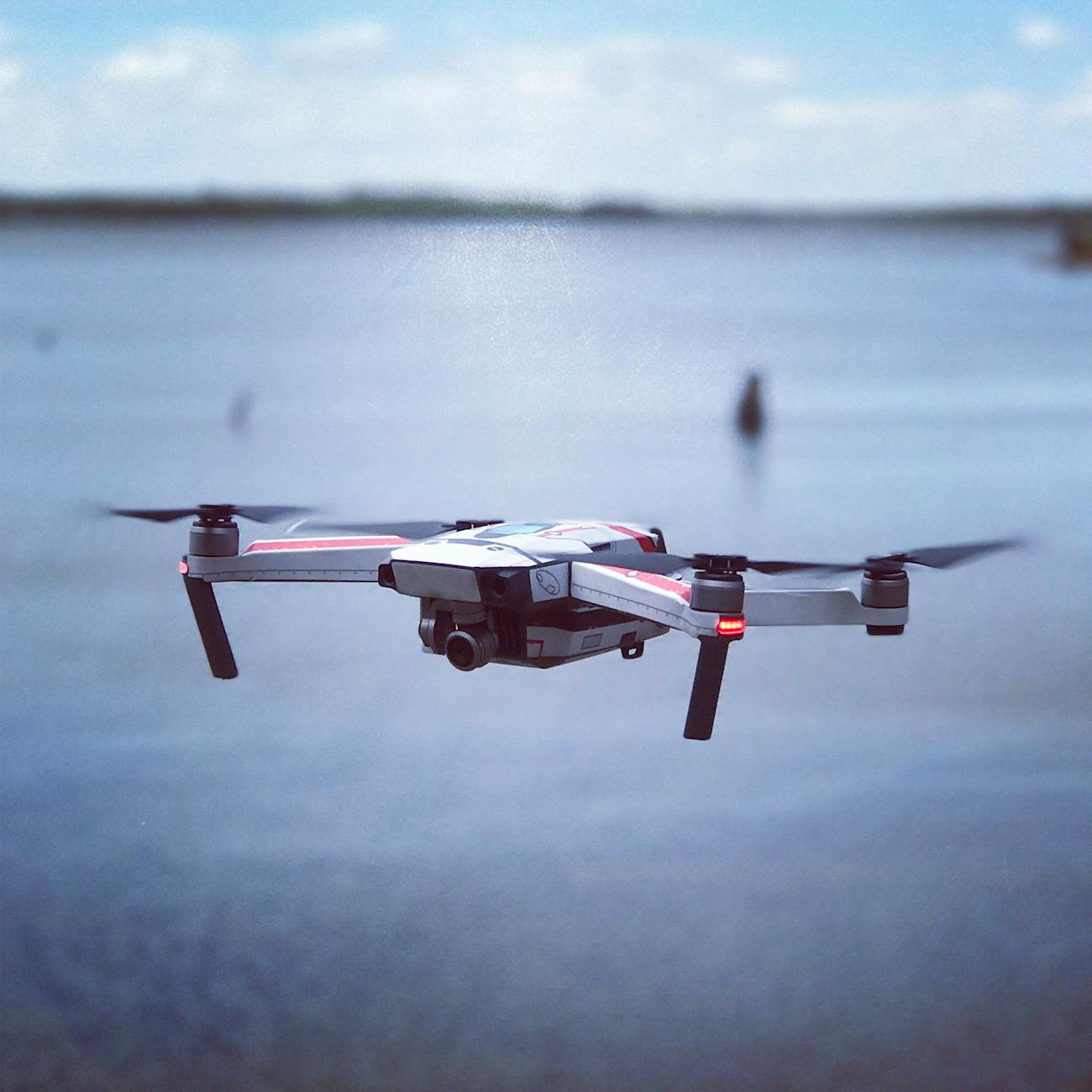
Drone Swarm Intelligence and Coordination are key concepts in the field of AI-Powered Drone Technology. In this explanation, we will delve into the meaning and significance of these terms, as well as related vocabulary. We will provide examples and practical applications, and challenge you to deepen your understanding.
Drone Swarm: A group of drones operating in a coordinated manner to achieve a common goal. Drones in a swarm can be homogeneous, meaning they are identical in terms of their hardware and software, or heterogeneous, meaning they have different capabilities and functions.
Swarm Intelligence: The collective behavior of a decentralized, self-organized system, in which the individual components interact with each other and the environment to achieve a common goal. Swarm intelligence is inspired by the behavior of social insects, such as ants and bees, and other animal groups, such as flocks of birds and schools of fish.
Coordination: The process of ensuring that the individual drones in a swarm work together to achieve a common goal. This involves the exchange of information between the drones, as well as the ability to make decisions based on that information.
Decentralized Control: A system of control in which there is no single point of failure, and each drone in the swarm is able to make decisions independently, based on local information. Decentralized control is in contrast to centralized control, in which a single entity makes decisions for the entire swarm.
Communication: The exchange of information between drones in a swarm. Communication can take many forms, including wireless communication, visual communication, and acoustic communication.
Consensus Algorithms: A set of rules and procedures that allow a group of drones to come to a consensus on a particular course of action. Consensus algorithms are used to ensure that the individual drones in a swarm make decisions that are consistent with the overall goal of the swarm.
Flocking: A behavior in which a group of drones moves together in a coordinated manner, similar to a flock of birds. Flocking is an example of swarm intelligence, and is achieved through the use of simple rules and local communication between the drones.
Formation Control: The process of maintaining a specific shape or configuration of a group of drones. Formation control is used in applications such as aerial photography, surveillance, and search and rescue.
Obstacle Avoidance: The ability of a drone swarm to avoid obstacles in its path. Obstacle avoidance is achieved through the use of sensors, such as cameras and lidar, and algorithms that allow the drones to make decisions based on the information provided by those sensors.
Swarm Optimization: The use of swarm intelligence to solve optimization problems. Swarm optimization algorithms are inspired by the behavior of social insects and other animal groups, and are used in applications such as scheduling, routing, and resource allocation.
Practical Applications:
* Aerial photography: A drone swarm can be used to capture high-resolution images and videos from multiple angles, providing a unique perspective and a more comprehensive view of the subject. * Surveillance: A drone swarm can be used to monitor large areas, providing real-time information about suspicious activity and potential threats. * Search and rescue: A drone swarm can be used to quickly search large areas for missing persons, providing a faster and more efficient response than traditional search and rescue methods. * Delivery: A drone swarm can be used to deliver packages and other goods, providing a faster and more convenient alternative to traditional delivery methods.
Challenges:
* Communication: Ensuring that the individual drones in a swarm are able to communicate effectively with each other and the environment is a key challenge in swarm intelligence and coordination. * Decision making: Ensuring that the individual drones in a swarm make decisions that are consistent with the overall goal of the swarm is another key challenge. * Scalability: As the number of drones in a swarm increases, the challenges associated with communication, decision making, and coordination become more pronounced.
In conclusion, Drone Swarm Intelligence and Coordination is a rapidly evolving field with many practical applications and challenges. Understanding the key terms and vocabulary is essential for anyone interested in this field. By mastering these concepts, you will be well on your way to becoming an expert in AI-Powered Drone Technology.
Key takeaways
- In this explanation, we will delve into the meaning and significance of these terms, as well as related vocabulary.
- Drones in a swarm can be homogeneous, meaning they are identical in terms of their hardware and software, or heterogeneous, meaning they have different capabilities and functions.
- Swarm Intelligence: The collective behavior of a decentralized, self-organized system, in which the individual components interact with each other and the environment to achieve a common goal.
- This involves the exchange of information between the drones, as well as the ability to make decisions based on that information.
- Decentralized Control: A system of control in which there is no single point of failure, and each drone in the swarm is able to make decisions independently, based on local information.
- Communication can take many forms, including wireless communication, visual communication, and acoustic communication.
- Consensus algorithms are used to ensure that the individual drones in a swarm make decisions that are consistent with the overall goal of the swarm.