
Geospatial Modeling for Archaeological Interpretation
Geospatial Modeling for Archaeological Interpretation is a crucial aspect of GIS for Archaeology, allowing researchers to analyze, interpret, and visualize spatial data in order to make informed decisions about archaeological sites and land…
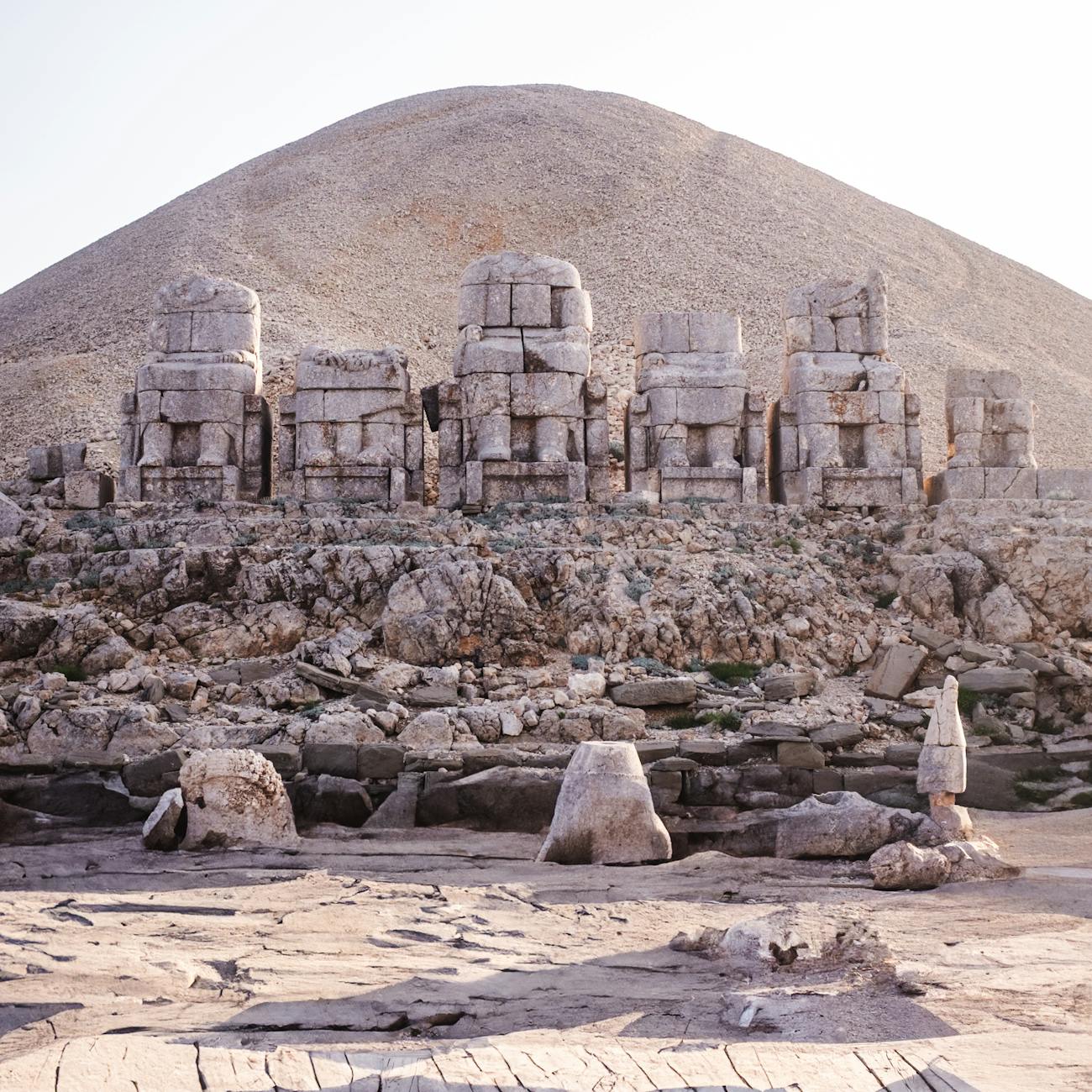
Geospatial Modeling for Archaeological Interpretation is a crucial aspect of GIS for Archaeology, allowing researchers to analyze, interpret, and visualize spatial data in order to make informed decisions about archaeological sites and landscapes. In this course, students will learn key terms and vocabulary related to geospatial modeling, which will help them understand and apply advanced GIS techniques in archaeological research.
1. **Geospatial Modeling**: Geospatial modeling is the process of creating mathematical representations of real-world phenomena in a geographic space. It involves using spatial data to simulate, analyze, and predict spatial relationships and patterns. Geospatial modeling is essential for archaeological interpretation as it allows researchers to understand the spatial context of archaeological sites and features.
2. **GIS (Geographic Information System)**: GIS is a powerful tool that allows users to capture, store, analyze, and visualize spatial data. It provides a platform for integrating various types of data, such as maps, satellite imagery, and archaeological data, to support decision-making processes. GIS is widely used in archaeology for mapping, analyzing, and interpreting spatial relationships.
3. **Spatial Data**: Spatial data refers to any data that has a geographic or spatial component. This can include coordinates, boundaries, distances, and other location-based information. Spatial data is essential for geospatial modeling as it provides the foundation for analyzing and interpreting spatial relationships.
4. **Raster Data**: Raster data is a type of spatial data that is represented by a grid of cells or pixels. Each cell in a raster dataset contains a value that represents a specific attribute, such as elevation, temperature, or land cover. Raster data is commonly used in geospatial modeling for analyzing continuous phenomena across a landscape.
5. **Vector Data**: Vector data is another type of spatial data that represents geographic features as points, lines, and polygons. Vector data is used to represent discrete features, such as archaeological sites, roads, and boundaries. Vector data is essential for geospatial modeling as it allows researchers to analyze spatial relationships and patterns.
6. **Spatial Analysis**: Spatial analysis is the process of examining spatial relationships, patterns, and trends in geographic data. It involves using GIS tools and techniques to analyze and interpret spatial data to gain insights into the underlying spatial processes. Spatial analysis is a key component of geospatial modeling for archaeological interpretation.
7. **Spatial Query**: A spatial query is a search operation that retrieves data based on their spatial relationships with other geographic features. Spatial queries allow researchers to extract specific information from spatial datasets based on their spatial attributes. Spatial queries are commonly used in geospatial modeling to identify and analyze spatial patterns.
8. **Spatial Join**: A spatial join is a method of combining spatial data from two or more datasets based on their spatial relationships. It allows researchers to link attributes from different datasets based on their spatial proximity or overlap. Spatial joins are useful in geospatial modeling for integrating and analyzing spatial data from multiple sources.
9. **Geospatial Analysis**: Geospatial analysis is the process of analyzing and interpreting spatial data to extract meaningful patterns and relationships. It involves using GIS tools and techniques to perform spatial analysis, modeling, and visualization. Geospatial analysis is essential for archaeological interpretation as it helps researchers understand the spatial context of archaeological sites and landscapes.
10. **Geospatial Statistics**: Geospatial statistics is a branch of statistics that focuses on analyzing spatial data and patterns. It involves using statistical techniques to detect spatial patterns, trends, and relationships in geographic data. Geospatial statistics are used in geospatial modeling to quantify and analyze spatial relationships in archaeological research.
11. **Spatial Autocorrelation**: Spatial autocorrelation is a measure of the degree to which spatial features are correlated with one another. It quantifies the spatial dependence between neighboring features in a dataset. Spatial autocorrelation is important in geospatial modeling as it helps researchers identify and analyze spatial patterns and relationships.
12. **Interpolation**: Interpolation is a method of estimating values at unknown locations based on known values at surrounding locations. It involves using mathematical algorithms to predict the values of continuous phenomena across a geographic space. Interpolation is commonly used in geospatial modeling for creating continuous surfaces, such as elevation models and heat maps.
13. **Buffer Analysis**: Buffer analysis is a spatial analysis technique that creates a zone or buffer around a geographic feature based on a specified distance. It allows researchers to analyze the spatial relationships and interactions between features within a specific distance. Buffer analysis is useful in geospatial modeling for assessing the proximity of archaeological sites to other features.
14. **Cost Distance Analysis**: Cost distance analysis is a spatial analysis technique that calculates the least-cost path between two locations based on a cost surface. It considers factors such as terrain, land cover, and obstacles to determine the optimal route between two points. Cost distance analysis is used in geospatial modeling for analyzing movement patterns and accessibility in archaeological landscapes.
15. **Multi-Criteria Evaluation**: Multi-criteria evaluation is a geospatial modeling technique that combines multiple criteria or factors to assess the suitability of different locations for a specific purpose. It involves weighting and overlaying spatial datasets to identify the most suitable locations based on predefined criteria. Multi-criteria evaluation is useful in archaeological interpretation for site selection and landscape analysis.
16. **3D Modeling**: 3D modeling is the process of creating three-dimensional representations of geographic features and landscapes. It involves using elevation data to visualize terrain, buildings, and other features in a 3D environment. 3D modeling is important in geospatial modeling for visualizing and analyzing archaeological sites in three dimensions.
17. **LiDAR (Light Detection and Ranging)**: LiDAR is a remote sensing technology that uses laser pulses to measure the distance between the sensor and the Earth's surface. It provides high-resolution elevation data and allows researchers to create detailed 3D models of terrain and features. LiDAR data is commonly used in geospatial modeling for archaeological interpretation and landscape analysis.
18. **Georeferencing**: Georeferencing is the process of matching spatial data to a coordinate system in order to establish its location on the Earth's surface. It involves aligning spatial data with a reference map or coordinate system to ensure accurate spatial analysis and visualization. Georeferencing is essential in geospatial modeling for integrating and analyzing spatial data from different sources.
19. **Accuracy Assessment**: Accuracy assessment is the process of evaluating the quality and reliability of spatial data and analysis results. It involves comparing the output of geospatial modeling with ground-truth data or reference datasets to assess its accuracy. Accuracy assessment is important in archaeological interpretation to ensure the validity of spatial analysis results.
20. **Challenges in Geospatial Modeling**: There are several challenges in geospatial modeling for archaeological interpretation, including data quality issues, spatial scale considerations, and complexity of spatial relationships. Researchers may encounter challenges such as data integration, spatial analysis errors, and interpretation of geospatial results. Overcoming these challenges requires careful consideration of data sources, spatial analysis techniques, and interpretation methods.
In conclusion, Geospatial Modeling for Archaeological Interpretation plays a crucial role in GIS for Archaeology, allowing researchers to analyze, interpret, and visualize spatial data to understand the spatial context of archaeological sites and landscapes. By mastering key terms and vocabulary related to geospatial modeling, students in the Professional Certificate in GIS for Archaeology course will be equipped with the knowledge and skills to apply advanced GIS techniques in archaeological research effectively.
Key takeaways
- In this course, students will learn key terms and vocabulary related to geospatial modeling, which will help them understand and apply advanced GIS techniques in archaeological research.
- Geospatial modeling is essential for archaeological interpretation as it allows researchers to understand the spatial context of archaeological sites and features.
- It provides a platform for integrating various types of data, such as maps, satellite imagery, and archaeological data, to support decision-making processes.
- Spatial data is essential for geospatial modeling as it provides the foundation for analyzing and interpreting spatial relationships.
- Each cell in a raster dataset contains a value that represents a specific attribute, such as elevation, temperature, or land cover.
- **Vector Data**: Vector data is another type of spatial data that represents geographic features as points, lines, and polygons.
- It involves using GIS tools and techniques to analyze and interpret spatial data to gain insights into the underlying spatial processes.