
Computer Vision Techniques
Computer vision techniques play a crucial role in the field of medical imaging, where the goal is to extract meaningful information from medical images to aid in diagnosis, treatment planning, and monitoring of various medical conditions. I…
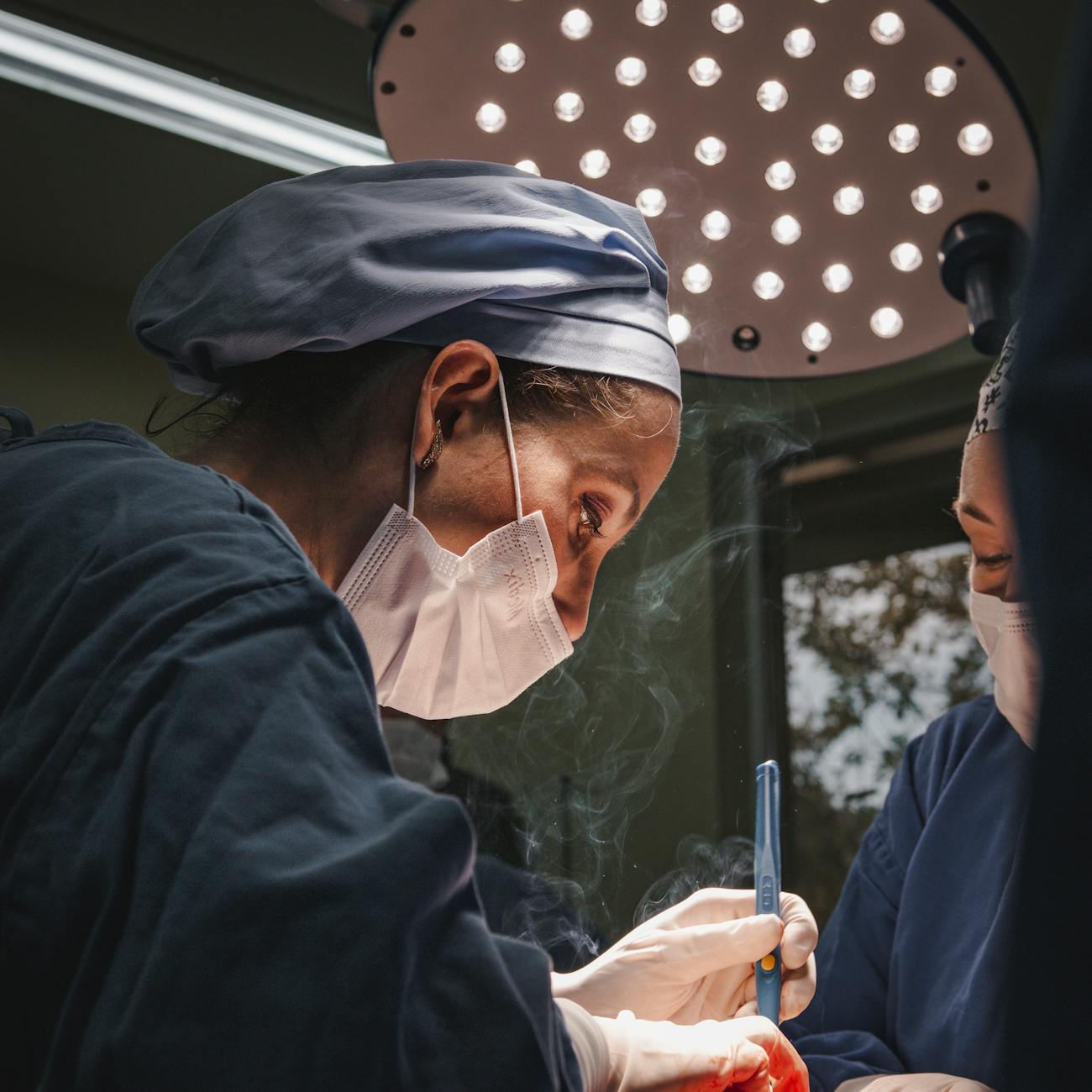
Computer vision techniques play a crucial role in the field of medical imaging, where the goal is to extract meaningful information from medical images to aid in diagnosis, treatment planning, and monitoring of various medical conditions. In this course, we will explore a variety of advanced computer vision techniques that can be applied to analyze medical images with a focus on artificial intelligence (AI) applications.
**Computer Vision**: Computer vision is a field of artificial intelligence that enables computers to interpret and understand visual information from the real world. It involves the development of algorithms and techniques that allow machines to "see" and process images or videos like humans do.
**Medical Imaging**: Medical imaging is the technique and process of creating visual representations of the interior of a body for clinical analysis and medical intervention. It plays a critical role in the diagnosis and treatment of various diseases and conditions.
**Artificial Intelligence (AI)**: Artificial intelligence refers to the simulation of human intelligence processes by machines, especially computer systems. AI technologies enable machines to learn from experience, adjust to new inputs, and perform tasks that typically require human intelligence.
**Deep Learning**: Deep learning is a subset of machine learning that uses artificial neural networks to model and interpret complex patterns in data. Deep learning algorithms are capable of learning representations of data through multiple layers of abstraction.
**Convolutional Neural Networks (CNNs)**: Convolutional Neural Networks are a class of deep neural networks that have proven to be particularly effective for image recognition tasks. CNNs are designed to automatically and adaptively learn spatial hierarchies of features from input images.
**Image Segmentation**: Image segmentation is the process of partitioning an image into multiple segments to simplify its representation and make it easier to analyze. It plays a crucial role in medical imaging for identifying and delineating structures of interest within the image.
**Object Detection**: Object detection is a computer vision technique that involves locating and classifying objects within an image or video. It is commonly used in medical imaging to detect and localize abnormalities or specific anatomical structures in medical images.
**Feature Extraction**: Feature extraction is the process of obtaining relevant information or features from raw data. In the context of medical imaging, feature extraction involves identifying and extracting key characteristics from medical images that are useful for analysis and interpretation.
**Data Augmentation**: Data augmentation is a technique used to artificially expand the size of a training dataset by applying various transformations to the existing data. It helps improve the generalization and robustness of machine learning models, especially when training data is limited.
**Transfer Learning**: Transfer learning is a machine learning technique where a model trained on one task is repurposed for another related task. In the context of medical imaging, transfer learning can be used to leverage pre-trained models on large image datasets to improve the performance of models on medical image analysis tasks.
**Unsupervised Learning**: Unsupervised learning is a machine learning paradigm where models learn patterns from unlabeled data without explicit guidance or supervision. It can be used in medical imaging for tasks such as clustering similar images or discovering hidden structures within the data.
**Supervised Learning**: Supervised learning is a machine learning approach where models are trained on labeled data with known outputs. In medical imaging, supervised learning is commonly used for tasks such as image classification, object detection, and segmentation.
**Anomaly Detection**: Anomaly detection is a technique used to identify patterns in data that do not conform to expected behavior. In medical imaging, anomaly detection can help identify abnormalities or outliers in medical images that may indicate the presence of a disease or condition.
**Image Registration**: Image registration is the process of aligning two or more images of the same scene taken at different times, from different viewpoints, or using different modalities. It is essential in medical imaging for combining information from multiple images for better analysis and interpretation.
**Data Preprocessing**: Data preprocessing involves transforming raw data into a format that is suitable for analysis and modeling. In medical imaging, data preprocessing may include tasks such as resizing images, normalizing pixel values, and removing noise to improve the accuracy of machine learning models.
**Model Evaluation**: Model evaluation is the process of assessing the performance of a machine learning model on unseen data. In medical imaging, model evaluation is crucial for determining the effectiveness of AI algorithms in tasks such as disease detection, segmentation, and classification.
**Confusion Matrix**: A confusion matrix is a table that is used to evaluate the performance of a classification model. It shows the number of true positives, true negatives, false positives, and false negatives, which can be used to calculate various metrics such as accuracy, precision, recall, and F1 score.
**Precision and Recall**: Precision and recall are two important metrics used to evaluate the performance of classification models. Precision measures the proportion of true positive predictions among all positive predictions, while recall measures the proportion of true positive predictions among all actual positive instances.
**F1 Score**: The F1 score is a metric that combines precision and recall into a single value, providing a balance between the two measures. It is calculated as the harmonic mean of precision and recall and is particularly useful when dealing with imbalanced datasets.
**Receiver Operating Characteristic (ROC) Curve**: The ROC curve is a graphical representation of the performance of a binary classification model as its discrimination threshold is varied. It plots the true positive rate against the false positive rate, providing a visual assessment of the model's performance.
**Area Under the Curve (AUC)**: The Area Under the Curve is a metric that quantifies the overall performance of a binary classification model represented by the ROC curve. A higher AUC value indicates better discrimination ability of the model in distinguishing between positive and negative instances.
**Hyperparameter Tuning**: Hyperparameter tuning is the process of selecting the optimal set of hyperparameters for a machine learning model to improve its performance. It involves experimenting with different configurations and tuning parameters such as learning rate, batch size, and network architecture.
**Overfitting and Underfitting**: Overfitting occurs when a machine learning model performs well on the training data but poorly on unseen data, indicating that the model has learned noise or irrelevant patterns. Underfitting, on the other hand, occurs when a model is too simple to capture the underlying patterns in the data.
**Data Imbalance**: Data imbalance refers to the situation where the distribution of classes in a dataset is skewed, with one or more classes having significantly fewer instances than others. Data imbalance can lead to biased models and poor performance, especially in tasks like disease detection where the classes are imbalanced.
**Interpretability**: Interpretability refers to the ability to explain and understand the decisions made by a machine learning model. In the context of medical imaging, interpretability is crucial for gaining insights into how AI algorithms arrive at their predictions and ensuring trust and transparency in the decision-making process.
**Challenges in Medical Imaging**: Medical imaging presents several challenges for AI applications, including the need for large labeled datasets, variability in imaging techniques and quality, interpretability of AI models, regulatory and ethical considerations, and integration with clinical workflows.
In this course, we will delve into these key terms and concepts related to computer vision techniques in medical imaging, exploring their practical applications, challenges, and implications for advancing healthcare through AI technologies. By mastering these concepts, you will be equipped with the knowledge and skills to apply advanced computer vision techniques to analyze medical images effectively and contribute to the ongoing evolution of AI in medical imaging.
Key takeaways
- Computer vision techniques play a crucial role in the field of medical imaging, where the goal is to extract meaningful information from medical images to aid in diagnosis, treatment planning, and monitoring of various medical conditions.
- **Computer Vision**: Computer vision is a field of artificial intelligence that enables computers to interpret and understand visual information from the real world.
- **Medical Imaging**: Medical imaging is the technique and process of creating visual representations of the interior of a body for clinical analysis and medical intervention.
- **Artificial Intelligence (AI)**: Artificial intelligence refers to the simulation of human intelligence processes by machines, especially computer systems.
- **Deep Learning**: Deep learning is a subset of machine learning that uses artificial neural networks to model and interpret complex patterns in data.
- **Convolutional Neural Networks (CNNs)**: Convolutional Neural Networks are a class of deep neural networks that have proven to be particularly effective for image recognition tasks.
- **Image Segmentation**: Image segmentation is the process of partitioning an image into multiple segments to simplify its representation and make it easier to analyze.