
Preparing and using welding equipment.
Welding Equipment
Welding Equipment
Welding is a crucial process in engineering operations, and having the right equipment is essential to ensure a successful and safe weld. Various pieces of equipment are used in welding, each serving a specific purpose to achieve the desired weld quality. Let's delve into the key terms and vocabulary related to preparing and using welding equipment in the Level 2 Certificate in Performing Engineering Operations course.
Welding Machine
A welding machine, also known as a welder or welding power supply, is the primary equipment used to generate the necessary heat for welding. It converts electrical energy into heat energy, which is then used to melt the base metals to create a weld. Welding machines come in different types, such as stick welders, MIG welders, TIG welders, and flux-cored welders, each suitable for specific welding processes and materials.
Gas Cylinders
Gas cylinders are pressurized containers used to store gases like oxygen, acetylene, argon, and CO2, commonly used in welding processes. These gases play a crucial role in shielding the weld pool, creating the necessary atmosphere for welding, or providing additional heat for certain welding techniques. It is essential to handle gas cylinders with care and ensure they are stored in a well-ventilated area away from heat sources.
Welding Electrodes
Welding electrodes, also known as welding rods, are consumable filler materials used in welding to join two pieces of metal together. The electrode conducts electricity, creating an arc that melts the base metal and the electrode, forming a molten pool that solidifies to create a strong bond. Different types of electrodes are available, each designed for specific welding processes and materials, such as E6010 for stick welding or ER70S-6 for MIG welding.
Welding Helmet
A welding helmet is a crucial safety equipment that protects the welder's face, eyes, and neck from sparks, UV radiation, and infrared light generated during welding. It typically features a darkened lens that automatically adjusts to the brightness of the welding arc, providing clear visibility while ensuring eye protection. Welding helmets should meet safety standards and be properly maintained to ensure optimal protection for the welder.
Welding Gloves
Welding gloves are specialized gloves designed to protect the welder's hands from heat, sparks, and molten metal during welding. They are typically made from heat-resistant materials like leather or Kevlar and feature long cuffs to provide additional protection to the wrists and forearms. Welding gloves should fit snugly to ensure dexterity while offering maximum protection against welding hazards.
Welding Apron
A welding apron is a protective garment worn by welders to shield their clothing and body from sparks, splatter, and heat generated during welding. It is typically made from flame-resistant materials like leather or cotton and features adjustable straps for a comfortable fit. Welding aprons should cover the front of the body and extend below the knees to provide comprehensive protection while allowing freedom of movement.
Welding Clamps
Welding clamps are tools used to hold workpieces in place during welding, ensuring proper alignment and stability for a precise weld. They come in various types, such as C-clamps, locking pliers, and magnetic clamps, each suitable for different welding applications. Welding clamps are essential for securing workpieces securely to prevent distortion or misalignment during the welding process.
Chipping Hammer
A chipping hammer is a handheld tool used to remove slag, spatter, and excess weld metal from the weld joint after welding. It features a chisel-like end for chipping away hardened debris and a hammer head for striking the weld to dislodge the impurities. Chipping hammers help clean the weld area, ensuring a smooth surface for inspection and subsequent welding passes.
Wire Brush
A wire brush is a cleaning tool used to remove rust, scale, paint, and other contaminants from the base metal before welding. It features wire bristles attached to a handle, which are used to scrub the metal surface to achieve a clean and smooth finish. Wire brushes come in different sizes and shapes, such as hand brushes, wheel brushes, or cup brushes, each suitable for specific cleaning tasks in welding.
Grinder
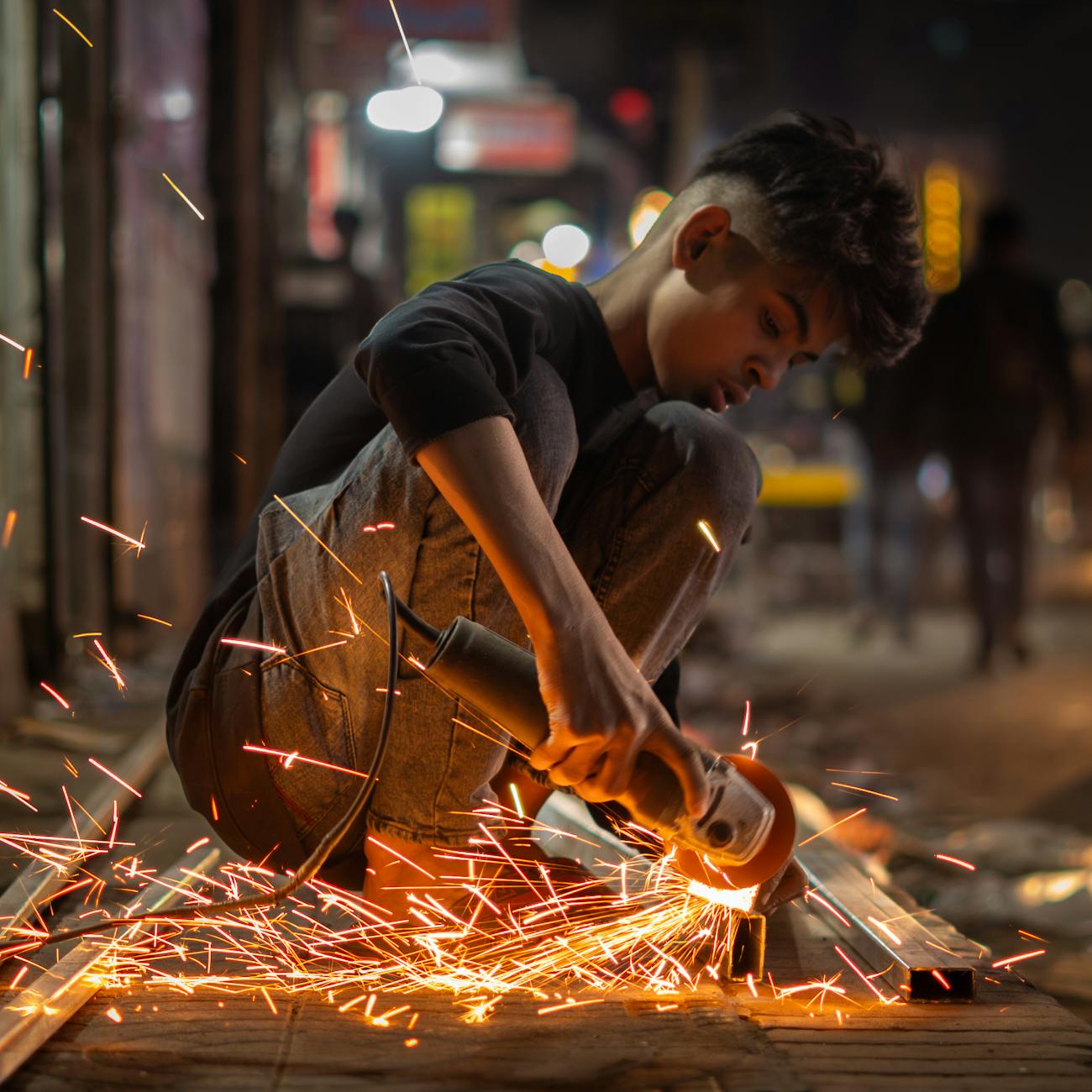
A grinder is a power tool used to grind, cut, and polish metal surfaces, preparing them for welding or removing excess material after welding. It typically features a rotating abrasive disc or wheel that can be adjusted for different tasks, such as grinding weld beads, cutting metal, or smoothing rough edges. Grinders should be used with caution and proper safety gear to prevent accidents and ensure precise metal preparation.
Welding Table
A welding table is a sturdy work surface used for welding, cutting, and fabricating metal components. It provides a flat and stable platform for securing workpieces, welding jigs, and clamps during the welding process. Welding tables may feature slots, holes, or clamps for easy workpiece positioning and alignment, enhancing workflow efficiency and ensuring precise weld quality.
Welding Jig
A welding jig is a tool used to hold and position workpieces in the correct alignment for welding. It helps ensure consistency and accuracy in weld joint preparation, reducing the risk of welding defects or misalignment. Welding jigs come in various designs, such as angle jigs, corner jigs, or pipe clamps, each tailored to specific welding applications and workpiece shapes.
Welding Shield
A welding shield is a protective barrier used to shield nearby workers, equipment, and surroundings from welding hazards like sparks, UV radiation, and heat. It can be a physical barrier made from fire-resistant materials or a designated welding area with safety measures in place to prevent accidents. Welding shields are essential for creating a safe work environment and preventing injuries or damage during welding operations.
Welding Curtain
A welding curtain is a flexible barrier made from fire-resistant materials like PVC or fiberglass, used to shield nearby workers from welding hazards. It can be hung around the welding area to contain sparks, UV radiation, and fumes, protecting others from exposure to welding hazards. Welding curtains should be properly installed and maintained to ensure effective protection and compliance with safety regulations.
Welding Fume Extractor
A welding fume extractor is a ventilation system designed to remove welding fumes, smoke, and airborne particles generated during welding. It helps maintain clean air quality in the welding environment, protecting welders from respiratory hazards and ensuring compliance with safety regulations. Welding fume extractors can be portable units or fixed systems integrated into welding booths or workstations for efficient fume extraction.
Welding PPE
Welding personal protective equipment (PPE) includes a range of safety gear worn by welders to protect themselves from welding hazards. This includes welding helmets, gloves, aprons, safety glasses, respirators, and ear protection. Welding PPE should be worn at all times during welding operations to prevent injuries, burns, and exposure to harmful substances, ensuring the safety and well-being of the welder.
Welding Consumables
Welding consumables are materials that are consumed or used up during the welding process, such as welding electrodes, filler metals, shielding gases, and fluxes. These consumables play a crucial role in creating strong and durable welds by providing the necessary heat, filler material, and protection for the weld pool. Choosing the right welding consumables for the welding process and material type is essential to achieve high-quality welds.
Welding Inspection Equipment
Welding inspection equipment includes tools and instruments used to inspect and assess the quality of welds, such as weld gauges, ultrasonic testing equipment, magnetic particle testing equipment, and visual inspection tools. These instruments help detect welding defects, discontinuities, or imperfections in welds, ensuring compliance with welding standards and specifications. Welding inspection equipment is essential for maintaining weld quality and integrity in engineering operations.
Welding Safety Procedures
Welding safety procedures are guidelines and protocols that must be followed to ensure the safety of welders, bystanders, and the work environment during welding operations. This includes wearing appropriate PPE, maintaining a clean and organized work area, following proper welding techniques, and adhering to safety regulations and standards. Welding safety procedures help prevent accidents, injuries, and damage, promoting a safe and productive work environment for welding activities.
Welding Techniques
Welding techniques are methods used to join two or more pieces of metal together through the application of heat and pressure. Common welding techniques include shielded metal arc welding (SMAW), gas metal arc welding (GMAW), gas tungsten arc welding (GTAW), and flux-cored arc welding (FCAW). Each welding technique has its advantages, applications, and challenges, requiring specific equipment, consumables, and skills for successful implementation.
Welding Defects
Welding defects are imperfections or irregularities in welds that can compromise the strength, integrity, or appearance of the welded joint. Common welding defects include porosity, undercut, lack of fusion, incomplete penetration, and cracks. Detecting and addressing welding defects is essential to ensure weld quality and performance, requiring proper inspection, repair, and preventive measures to avoid future defects.
Welding Codes and Standards
Welding codes and standards are guidelines and specifications established by regulatory bodies, organizations, and industries to ensure the quality, safety, and reliability of welded structures and components. Common welding codes include AWS D1.1 for structural welding, ASME Section IX for pressure vessel welding, and ISO 9606 for welder qualification. Adhering to welding codes and standards is essential for achieving compliance, quality assurance, and certification in welding operations.
Welding Qualification
Welding qualification is the process of certifying welders, procedures, and equipment to ensure they meet the required standards and specifications for a specific welding application. This includes welder performance qualification (WPQ), procedure qualification record (PQR), and welding procedure specification (WPS). Welding qualification tests assess the welder's skills, knowledge, and ability to produce quality welds, ensuring compliance with welding requirements and industry standards.
Welding Automation
Welding automation is the use of automated systems, robots, or machinery to perform welding tasks, increasing efficiency, accuracy, and productivity in welding operations. Automated welding systems can be used for repetitive or complex welding processes, reducing labor costs, cycle times, and human error. Welding automation requires specialized equipment, programming, and maintenance to optimize performance and quality in industrial welding applications.
Welding Power Sources
Welding power sources are devices that provide the necessary electrical energy for welding, such as transformers, inverters, or engine-driven generators. They convert input power into the appropriate voltage, current, and waveform required for specific welding processes, ensuring stable arc characteristics and weld quality. Choosing the right welding power source for the welding process and material type is essential to achieve consistent and reliable welds.
Welding Electrode Holder
A welding electrode holder, also known as a stinger or electrode clamp, is a tool used to hold and connect the welding electrode to the welding machine during welding. It provides a secure grip on the electrode, ensuring proper electrical contact and arc stability during the welding process. Welding electrode holders come in various sizes and designs, each suitable for different electrode diameters and welding applications.
Welding Positioner
A welding positioner is a device used to rotate, tilt, or manipulate the workpiece into the desired position for welding. It helps welders access hard-to-reach areas, maintain a consistent welding angle, and improve weld quality and productivity. Welding positioners come in different configurations, such as rotary tables, tilt-turn positioners, or headstock-tailstock positioners, each tailored to specific welding applications and workpiece sizes.
Welding Consumable Storage
Welding consumable storage is the proper handling and storage of welding consumables to prevent contamination, degradation, or damage that can affect weld quality. This includes storing electrodes, filler metals, and shielding gases in dry, clean, and well-ventilated areas away from moisture, dirt, or other contaminants. Proper welding consumable storage practices help ensure the integrity and performance of consumables, resulting in high-quality welds and consistent outcomes.
Welding Joint Preparation
Welding joint preparation is the process of preparing the workpieces before welding to ensure proper fit-up, alignment, and cleanliness for a successful weld. This includes cleaning, beveling, chamfering, or grooving the joint edges, removing contaminants, and ensuring tight tolerances for optimal welding conditions. Proper welding joint preparation is essential to prevent defects, promote weld penetration, and achieve strong and durable welds in engineering operations.
Welding Gas Regulator
A welding gas regulator is a device used to control the flow and pressure of shielding gases from gas cylinders to the welding torch during welding. It regulates the gas flow rate, ensuring a stable and consistent shielding atmosphere for the weld pool, preventing oxidation and contamination. Welding gas regulators come in different types, such as single-stage or dual-stage regulators, each designed for specific gas types and welding applications.
Welding Torch
A welding torch is a handheld tool connected to the welding machine that delivers the heat, electricity, and shielding gas needed for welding. It features a nozzle, electrode, and gas diffuser that create the welding arc and protect the molten weld pool from atmospheric contamination. Welding torches come in various designs, such as TIG torches, MIG guns, or plasma torches, each suitable for specific welding processes and materials.
Welding Wire Feeder
A welding wire feeder is a device used to feed welding wire from a spool to the welding torch during welding, ensuring a continuous and consistent supply of filler material. It controls the wire feed speed, tension, and alignment, optimizing weld quality and productivity. Welding wire feeders can be integrated into the welding machine or used as standalone units, providing flexibility and convenience in wire feeding operations.
Welding Heat Input
Welding heat input is the amount of heat energy transferred to the base metal during welding, affecting the weld penetration, fusion, and cooling rate. It is calculated based on the welding parameters, such as voltage, current, arc time, and travel speed, and is expressed in kilojoules per millimeter (kJ/mm) or kilojoules per inch (kJ/in). Controlling welding heat input is critical to achieving the desired weld quality, minimizing distortion, and preventing welding defects.
Welding Travel Speed
Welding travel speed is the rate at which the welding torch or electrode moves along the joint during welding, affecting weld bead shape, penetration, and cooling rate. It is measured in inches per minute (ipm) or millimeters per minute (mm/min) and is influenced by welding parameters, joint geometry, and material thickness. Adjusting welding travel speed is essential to maintain proper heat input, prevent overheating, and achieve uniform weld beads in welding operations.
Welding Preheating
Welding preheating is the process of heating the base metal before welding to reduce cooling rates, prevent cracking, and improve weldability. Preheating is commonly used for thick or high-strength materials to minimize residual stresses and ensure proper fusion in the weld joint. The preheating temperature and time are determined based on material properties, welding process, and joint configuration, optimizing weld quality and integrity.
Welding Post-Heating
Welding post-heating is the process of heating the completed weld joint after welding to relieve residual stresses, improve ductility, and prevent cracking. Post-heating is often used for high-stress applications or thick sections to enhance weld toughness and reduce the risk of hydrogen-induced cracking. The post-heating temperature and duration are specified in welding procedures to ensure proper heat treatment and weld performance in engineering operations.
Welding Distortion
Welding distortion is the undesirable deformation or misalignment of the base metal caused by welding-induced stresses, shrinkage, or thermal expansion. It can lead to dimensional inaccuracies, fit-up issues, or weld defects if not properly controlled. Minimizing welding distortion requires proper joint design, material selection, welding sequence, and heat management techniques to maintain dimensional stability and quality in welded structures.
Welding Gas Metal Arc Welding (GMAW)
Gas metal arc welding (GMAW), also known as MIG welding, is a welding process that uses a continuous solid wire electrode and shielding gas to create the weld. The electrode is fed through a welding gun, where an electric arc is formed between the wire and the workpiece, melting the base metal and filler wire to create a strong weld joint. GMAW is versatile, fast, and suitable for a wide range of materials, making it a popular choice in metal fabrication and manufacturing.
Welding Gas Tungsten Arc Welding (GTAW)
Gas tungsten arc welding (GTAW), also known as TIG welding, is a welding process that uses a non-consumable tungsten electrode and shielding gas to create the weld. The electrode produces an electric arc that melts the base metal, while filler wire is added manually to create the weld pool. GTAW produces high-quality, precise welds with excellent control over heat input and weld appearance, making it ideal for thin materials, exotic alloys, and critical applications.
Welding Shielded Metal Arc Welding (SMAW)
Shielded metal arc welding (SMAW), also known as stick welding, is a welding process that uses a consumable coated electrode and a flux covering to create the weld. The electrode is manually fed into the weld joint, where an electric arc is struck, melting the electrode and base metal to form the weld pool. SMAW is versatile, portable, and suitable for outdoor or remote welding applications, making it a popular choice in construction, maintenance, and repair work.
Welding Flux-Cored Arc Welding (FCAW)
Flux-cored arc welding (FCAW) is a welding process that uses a tubular wire electrode filled with flux to create the weld. The flux core provides shielding gas and deoxidizers, eliminating the need for external shielding gas, making FCAW suitable for outdoor or windy conditions. FCAW is versatile, easy to learn, and produces high deposition rates, making it ideal for heavy-duty applications, structural welding, and fabrication work.
Welding Gas Metal Arc Welding (GMAW) Process
The gas metal arc welding (GMAW) process, also known as MIG welding, involves feeding a continuous solid wire electrode through a welding gun, where an electric arc is formed between the wire and the workpiece. The heat
Key takeaways
- Let's delve into the key terms and vocabulary related to preparing and using welding equipment in the Level 2 Certificate in Performing Engineering Operations course.
- Welding machines come in different types, such as stick welders, MIG welders, TIG welders, and flux-cored welders, each suitable for specific welding processes and materials.
- These gases play a crucial role in shielding the weld pool, creating the necessary atmosphere for welding, or providing additional heat for certain welding techniques.
- Different types of electrodes are available, each designed for specific welding processes and materials, such as E6010 for stick welding or ER70S-6 for MIG welding.
- A welding helmet is a crucial safety equipment that protects the welder's face, eyes, and neck from sparks, UV radiation, and infrared light generated during welding.
- They are typically made from heat-resistant materials like leather or Kevlar and feature long cuffs to provide additional protection to the wrists and forearms.
- Welding aprons should cover the front of the body and extend below the knees to provide comprehensive protection while allowing freedom of movement.